
October 2026 President Letter
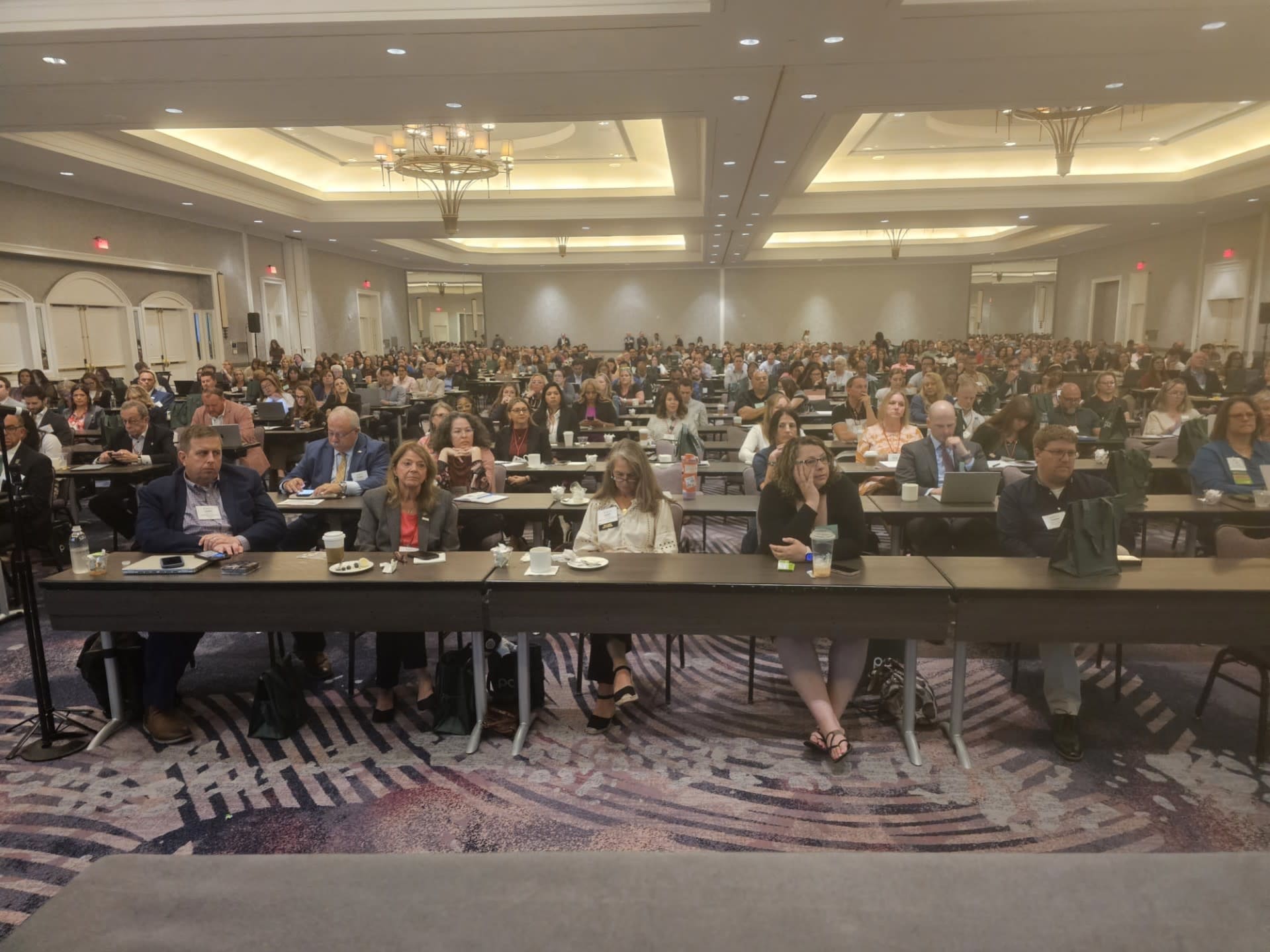 Standing on the stage during our opening general session in San Diego, I found myself looking out at a remarkable sight: the largest gathering of attendees in NAFTZ's history. I stopped to take a photograph because sometimes numbers alone simply don't capture what you're experiencing.
But what struck me wasn't just the size of the audience. It was how many faces I didn't recognize.
For an association that has long prided itself on the relationships within our community, that's an exciting development and a reminder of how NAFTZ is changing. Over the past several years, we've welcomed hundreds of new members, bringing fresh perspectives, experiences, and enthusiasm to an Association with more than five decades of history.
Throughout the week, I kept returning to that reality. Having so many new colleagues among us is worth celebrating, and it brings a responsibility: ensuring that every member, whether they've been with us for decades or joined just last month, feels welcomed, connected, and valued.
Our Community and Our Federal Partners
One of the notable aspects of this year's conference was the seniority of the federal officials who joined us. NAFTZ has long enjoyed strong working relationships with the agencies responsible for shaping and administering U.S. trade policy. Representatives from U.S. Customs and Border Protection (CBP) and the Foreign-Trade Zones Board participate in our conferences regularly.
This year, amid considerable leadership and staffing changes across federal agencies, we were joined by particularly senior representatives from multiple CBP offices. We were also pleased to welcome Jennifer Thornton, General Counsel of the Office of the U.S. Trade Representative (USTR), an agency that occasionally participates in our Annual Conference. Her participation was especially meaningful this year given the number of active issues before USTR and, I believe, reflects USTR's recognition of the importance of the U.S. FTZ program and the value of engaging with our community.
Having federal officials at this level join us in San Diego speaks to the mutual respect developed through years of consistent engagement, technical credibility, and constructive dialogue.
Several of these officials remarked on the size of our gathering. And while their presentations focused on their agencies' priorities, I believe there's considerable value in simply bringing federal leaders into a room filled with hundreds of professionals whose businesses and communities are directly connected to the U.S. FTZ program.
It's one thing to understand the program on paper. It's another to see the community behind it.
Our educational programming also reflected the evolution of the U.S. FTZ program and the professionals who support it. Each year, we introduce topics that respond to emerging challenges, changing practices, and opportunities within our community.
One session I particularly enjoyed moderating explored how U.S. FTZ grantees can go beyond their traditional responsibilities to provide additional value to the operators and businesses they serve. Hearing grantees from different parts of the country share their approaches offered practical ideas that others could bring back to their own communities.
That's one of the things I value most about our Annual Conference: discovering how our colleagues are developing new approaches and helping shape the program's future.
Remembering Those Who Came Before Us
Perhaps the most memorable moment of the entire conference, however, came during our tribute to John J. DaPonte Jr.
I first watched the tribute video about a week before the conference. At nearly 14 minutes long, I initially thought I might play it in the background while catching up on other work. Within two minutes, however, it had my full attention.
What unfolded was far more than a tribute to one individual. It was a remarkable look into the history of the U.S. FTZ program, the challenges it faced decades ago, and the extraordinary dedication of those who fought to preserve and strengthen it.
Their passion for the program and their genuine belief in what it could mean for businesses, workers, and communities across the country were unmistakable.
I was so moved that I immediately contacted Marshall Miller to tell him I considered the video a work of art. I also asked that we allow it to speak for itself at the conference, without additional remarks afterward. Some moments simply deserve to be experienced and absorbed without further explanation.
When the video concluded, I returned to the microphone only to dismiss the audience. There really wasn't anything more that needed to be said.
Judging by the response throughout the room and the conversations that followed, the tribute touched our attendees every bit as deeply as it had touched me.
Perhaps most remarkable was how strongly it resonated with people who had never met John, including longtime U.S. FTZ professionals who hadn't fully appreciated his contributions. For many, it was an emotional introduction to a history they hadn't known. For others, it brought back memories of the challenges faced and the people who worked so hard to overcome them.
The tribute brought together generations of U.S. FTZ professionals through a shared appreciation of our history.
It was a powerful reminder that the U.S. FTZ program we know today didn't simply happen. It exists because generations of dedicated individuals believed in its value and were willing to fight for its future. Their legacy is something we should never take for granted.
If you haven't yet seen this extraordinary tribute—or would like to experience it again—I encourage you to visit the Miller & Company homepage, where the video is prominently featured.
Growing Without Losing What Makes Us Special
As meaningful as those moments were, I left San Diego thinking just as much about the future of our own Association.
Today, NAFTZ is a community of more than 1,100 members.
But membership numbers alone aren't the measure of our success. What matters is what those members experience once they're here.
We need to help our newest colleagues find their place, build professional relationships, and discover opportunities to contribute.
Whether through our mentorship program, ELITE group for young and new U.S. FTZ professionals, committees, online communities, or simply the conversations that happen when U.S. FTZ professionals get together, we can help our newest members connect while continuing to serve those who have supported NAFTZ for decades.
After all, most of us know the challenge of explaining what we do for a living to friends and family! There's something particularly valuable about being surrounded by people who not only understand our profession but share our enthusiasm for the important role the U.S. FTZ program plays in our national and local economies.
For many of us, NAFTZ is more than a source of education, information, and advocacy. It's where we've found our professional community.
Investing in the NAFTZ Member Experience
That sense of community depends in part on the personal attention our members receive. We regularly hear from members who belong to multiple professional associations that NAFTZ stands apart because of the responsiveness and meaningful connections they find here.
I'm tremendously proud of our staff and the dedication they bring to serving our members every day. But as our membership has expanded, so have the demands on our small team. Dedication alone cannot indefinitely overcome the limits of our capacity.
Recognizing this, the NAFTZ Board of Directors approved a new staffing model during our Annual Conference to strengthen our ability to serve members while preserving that personal attention.
The model calls for two hires, but only one position is truly new. The other redefines Melissa's existing role to better align with our evolving needs. It also includes an expanded investment in federal advocacy services from our longtime partners at Sorini Strategic Advisors. We'll shift some responsibilities among staff members to better balance workloads and align with each person's experience and passions.
What matters most is what these changes will help us deliver for our members.
With additional capacity and clearer responsibilities, we'll be better positioned to provide timely technical information, strengthen our educational programming, advance our professional accreditation initiatives, and develop resources to help members navigate the increasingly complex U.S. FTZ environment.
We'll also be able to devote more attention to supporting our committees and helping members, especially those newer to the Association, connect with colleagues and become active participants in our community.
At the same time, our expanded advocacy resources will strengthen our ability to engage with federal policymakers and agencies, respond to emerging trade policy issues, and ensure that the perspectives and concerns of the U.S. FTZ community are heard in Washington.
Our Responsibility to the Generations Ahead
As I reflect on San Diego, I'm reminded that the strength of NAFTZ has always been about the people who make up this extraordinary community.
The Board's decision to strengthen our staffing and resources reflects our responsibility to the members who invest their time, resources, expertise, and enthusiasm in this Association.
John's tribute reminded us how much we owe to those who built and protected the U.S. FTZ program.
Today, it's our turn to carry that responsibility forward, investing in our community and strengthening the Association so that future generations of U.S. FTZ professionals will have the same opportunities to learn, connect, and succeed.
We are the beneficiaries of those who came before us, and the stewards of what we will leave behind.